When a crowded therapeutic area stops responding to conventional science communication, it's time to tell the same story differently.
What is a Metaphor of Action?
A Metaphor of Action (MPoA) is a medical animation approach that replaces literal molecular or cellular visualisation with an analogy drawn from everyday life or familiar technology — while preserving full scientific accuracy.
You've heard of Mode of Action. Think of this as its more disruptive sibling.
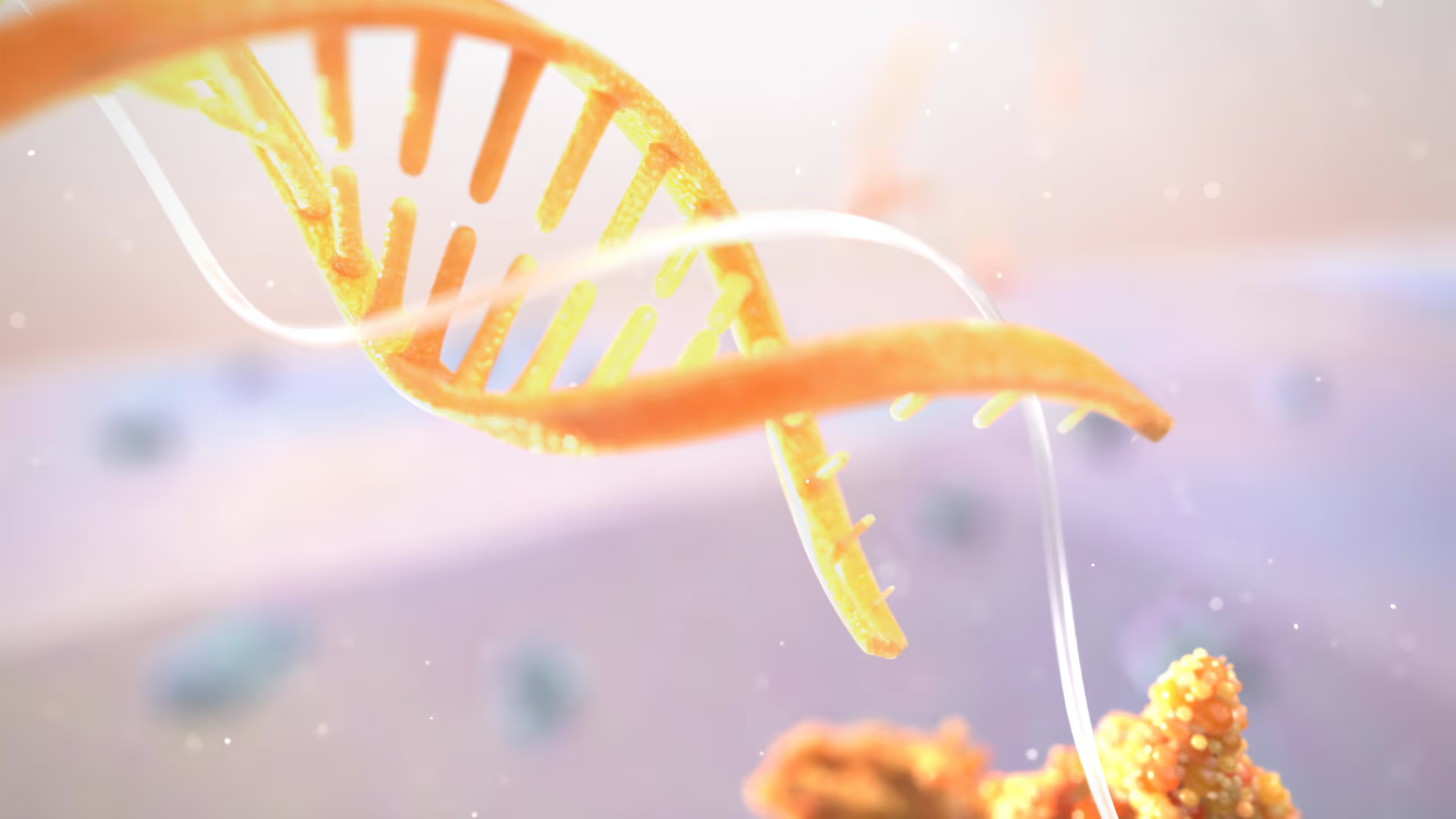
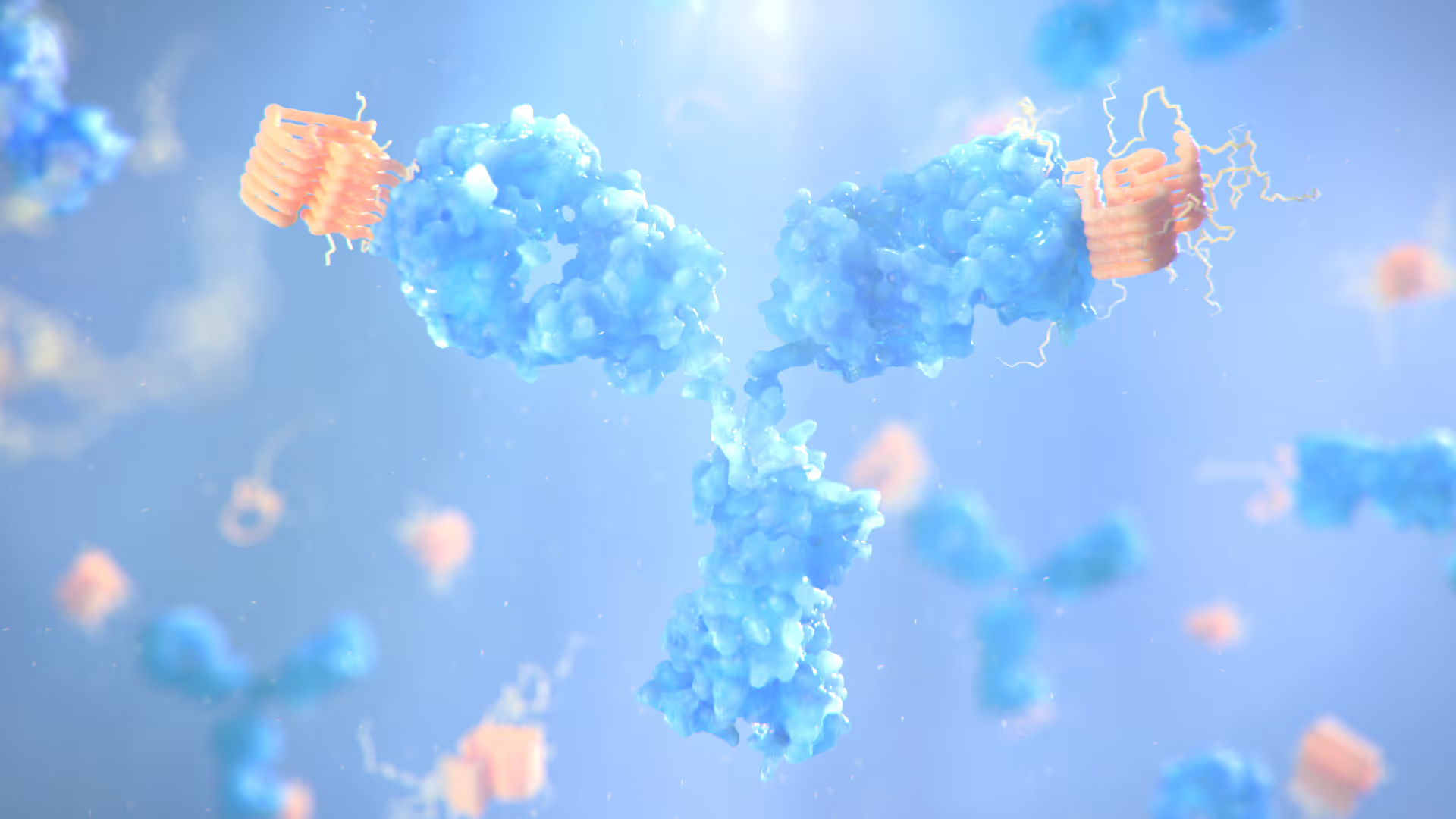
Mode of Action (MoA) animations remain the gold standard for communicating how a drug works. Realistic, highly finished 3D visuals can bring to life processes the human eye has never seen — and done well, they remain one of the most powerful tools in pharma communication.
But after delivering MoA animations across dozens of therapeutic areas, we're increasingly being asked the same question: what do you do when a category is so congested that even excellent science communication struggles to cut through?
The problem with busy therapeutic categories
In established therapeutic areas - depression, rheumatoid arthritis, oncology - HCPs have been exposed to a high volume of mechanism-based education. The science is real and important. But when every brand communicates through the same visual language of cells, receptors, and molecular pathways, the message risks blending into the background.
This is where the Metaphor of Action has emerged as a genuine strategic alternative.
MPoA in practice: Two examples
Mapping the mind - Brintellix
When communicating the multimodal pharmacology of Brintellix to HCPs, we needed to differentiate a drug acting on multiple brain targets from single-action treatments. Rather than animating the molecular interactions directly, we used a metro map analogy — dynamic, colour-coded pathways showing how the drug moved across multiple stations in the brain's network.
The result: HCPs reported improved recall in focus groups, and the metaphor was subsequently adopted into other education tools.
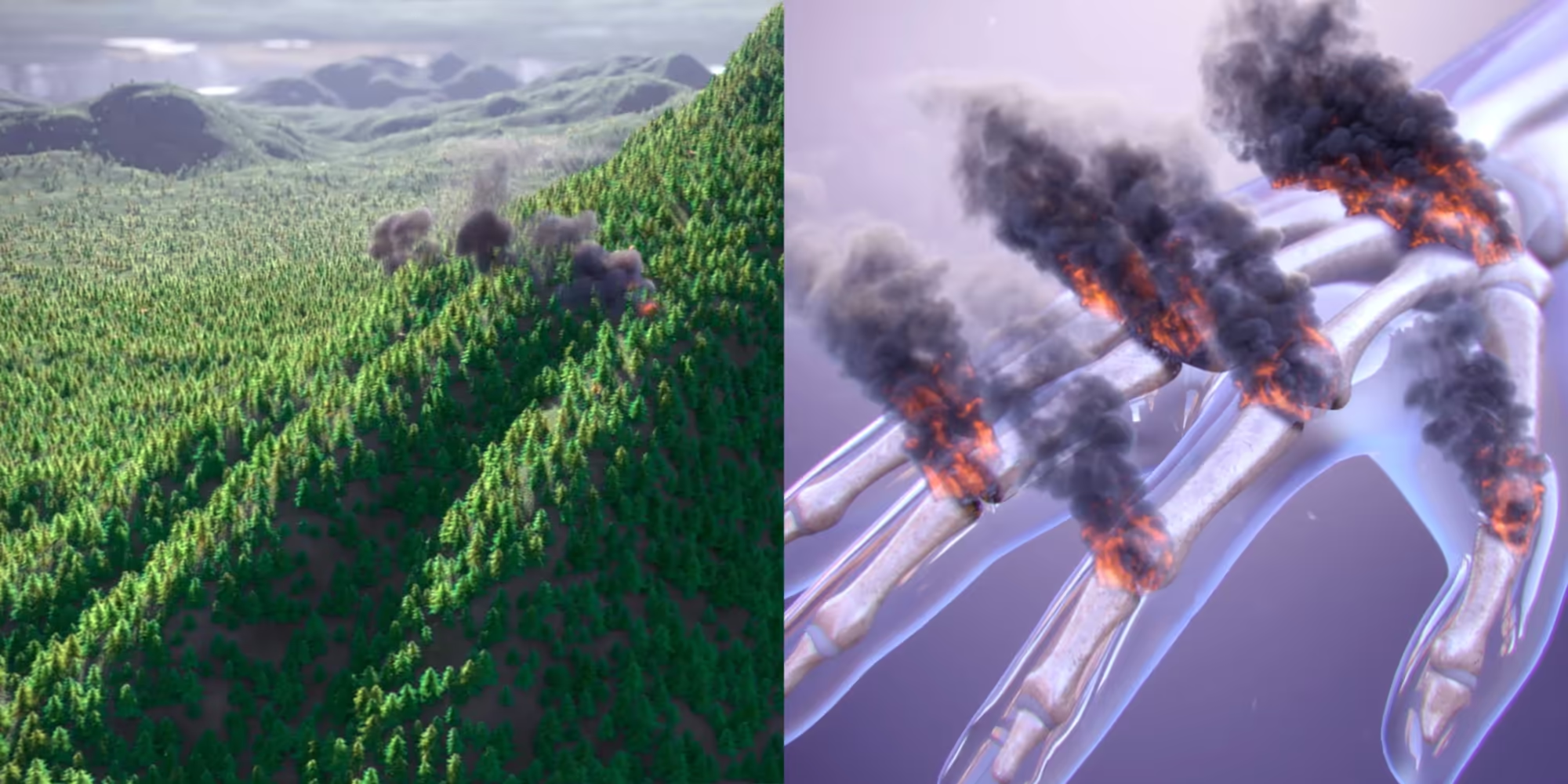
Stopping the fire - Rheumatoid Arthritis
The clinical argument for early biologic treatment in RA is compelling but hard to communicate emotionally. Structural joint damage, once done, cannot be undone - but HCPs often hesitate to initiate aggressive treatment early.
We used a forest fire metaphor, combined with a VHS rewind effect, to make that sense of irreversibility immediate and visceral. The approach gave HCPs an emotional grasp of why timing matters - not just an intellectual one. The client described the film as "a work of art," and the visual language became a cornerstone of their wider campaign.
[[related-case-study]]
5 reasons MPoA is worth considering at the start of every project
1. It simplifies without dumbing down.
By referencing something familiar - a map, a fire, a network - you give your audience an immediate frame of reference. Complex mechanisms become quicker to process because the cognitive work is shared with an analogy they already understand.
2. It broadens your audience.
MoA animations are built for scientists. An MPoA film can communicate the same underlying science to a broader room: investors, payers, patient groups, and cross-functional teams who don't have a clinical background.
3. It cuts through congested categories.
A distinctive visual metaphor stands apart from the category norm by design. In therapeutic areas where audiences have been saturated with similar-looking content, something that looks and feels genuinely different gets remembered.
4. It builds proprietary visual equity.
With greater memorability comes brand ownership. A strong metaphor gives your brand a visual language that is harder to replicate than a standard MoA animation - because the metaphor itself becomes associated with you.
5. It extends across channels.
A well-chosen metaphor doesn't live only in one film. It can anchor a slide deck, a congress stand, a digital module, a leave-behind. The RA wildfire metaphor, for example, was adopted as a campaign cornerstone - not just a one-off film.
And MoA? It's not going anywhere.
For launch communications, regulatory contexts, and situations where scientific precision is the primary need, a well-crafted MoA animation remains the most effective tool available. The two approaches aren't in competition.
The point is simply this: at the start of each new project, it's worth asking whether a metaphor could tell your story more powerfully than a literal visualisation. Sometimes the answer will be no. But asking the question costs nothing — and the times the answer is yes tend to produce the most memorable work.
Fusion Animation creates scientific and medical animations for pharma brands and healthcare communications agencies. If you're planning a mechanism of action project and want to explore whether a metaphor-based approach could work for your asset, get in touch.