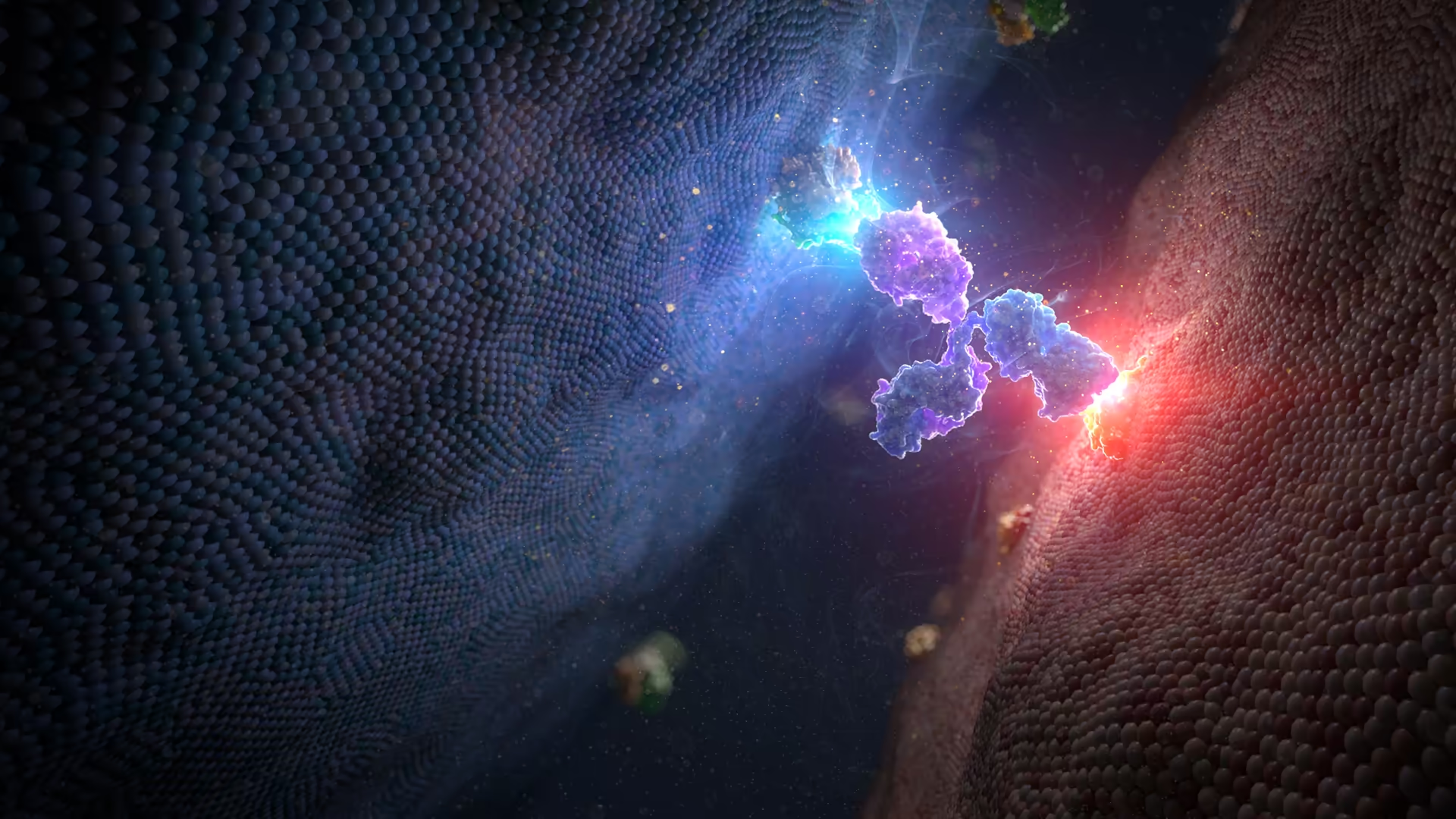
A high-impact 3D Medical Mechanism of Action video.
Bispecific Antibody in Non-Hodgkin Lymphoma
"It's exciting, but also a bit overwhelming with all of the new data and how fast the field is moving."
- Community Medical Hematologist & Oncologist
Client:
ExcerptaMedicaObjective
- Detail intricate cellular Mechanism of Action.
- Depict complex dual-binding trimer interactions accurately.
- Avoid generic, uninspiring oncology animation tropes.
Results
- Delivered engaging, MLR-ready medical affairs asset.
- Showed drug's potent cytotoxic efficacy clearly.
- Demonstrated profound depletion of malignant B-cells.
Outcome
Detailing Lymphoma Treatment
Fusion delivered an immersive medical animation, treating the biological sequence like a high-end cinematic narrative that isolates the key molecular players.
Targeted therapies in oncology are evolving quickly, and innovation shows little sign of slowing. Following the introduction of the first bispecific antibody for cancer in 2014, a further ten have been approved within four years, with more than 200 additional agents now in preclinical or clinical evaluation.¹ Differences between products in this space tend to be specific, sometimes subtle, and often complex. This case study is one of our medical animation examples of tackling that complexity directly: a 3D medical animation where our job was to help the client show a clear point of difference despite that complexity.
References
1. Goebeler, M.-E., Stuhler, G. and Bargou, R. (2024) 'Bispecific and multispecific antibodies in oncology: opportunities and challenges', Nature Reviews Clinical Oncology, 21, pp. 539–560.
Challenge one: showing why both targets matter
Epcoritamab is a bispecific antibody. One arm targets CD3 on T cells, the other targets CD20 on B cells. Neither target on its own produces any effect – it's only once the antibody has engaged both that anything happens.
The first task was helping the audience get comfortable with this mechanism from the ground up. It's exactly the kind of foundational understanding a mechanism of action animation needs to establish before anything else can land.
Our approach was to show the process as a straightforward, ordered sequence:
- Both arms bind to their respective targets at the same time, forming the trimeric complex. [[00:44]]
- Only after complex formation does T cell activation begin. [[00:57]]
- Activation leads to T cell-mediated destruction of the CD20-positive B cell. [[01:17]]
Setting it out step by step, rather than as a single combined action, goes some way to showing why this drug needed to work differently to a conventional monoclonal antibody, and why both targets play a distinct part rather than one simply reinforcing the other.
Challenge two: showing how combination treatments differ
As epcoritamab's approval has broadened, it's increasingly being used alongside other treatments rather than on its own. That brought a different kind of challenge: helping an audience see how several treatments work together, when each is doing something mechanistically distinct.
Our approach was to set each mechanism out alongside the others. The combination isn't epcoritamab with extra treatments layered on top – it's closer to three separate mechanisms working in parallel, each doing something the others don't.
For that to land, the audience arguably needs a decent grasp of how epcoritamab works on its own first. That grounding is what allows the other two mechanisms to read as genuinely different, rather than more of the same – which, in turn, is what the treatment decision tends to hinge on.
In summary
Neither of these challenges is particularly unique to this project. Any treatment working through more than one mechanism, increasingly used alongside others, tends to run into some version of the same problem: how to help an audience keep pace with the science, without losing sight of what actually matters. It's the kind of problem medical animation is well suited to solving.
More Case Studies
The proof is in the pudding. Check out our previous solutions for more insight into how we can help.
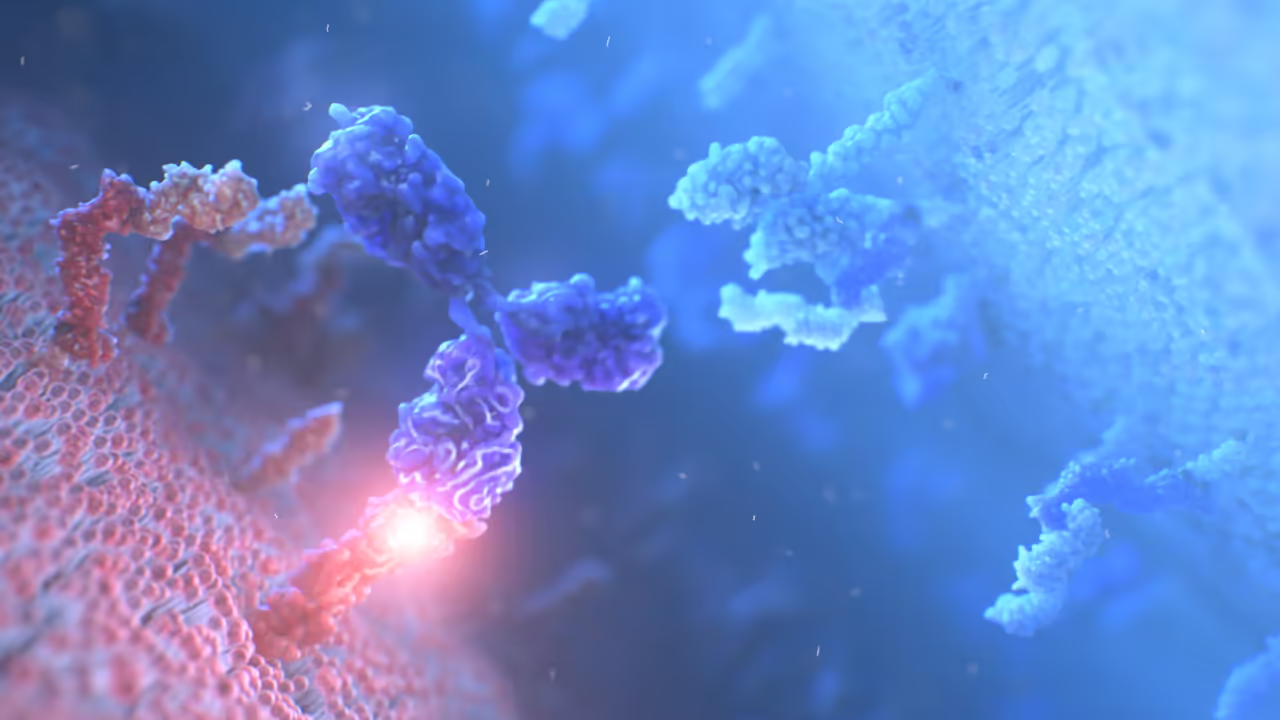
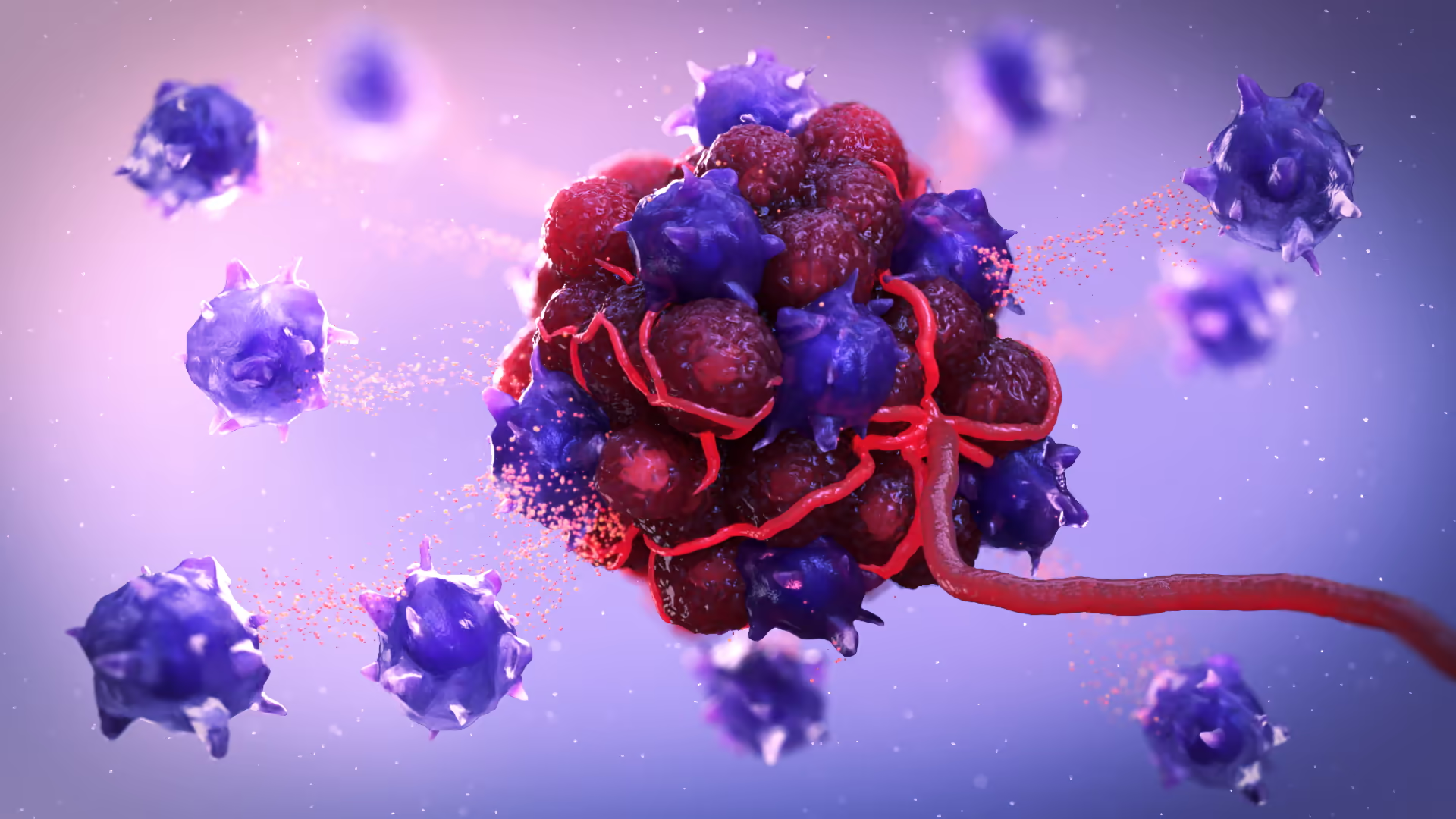
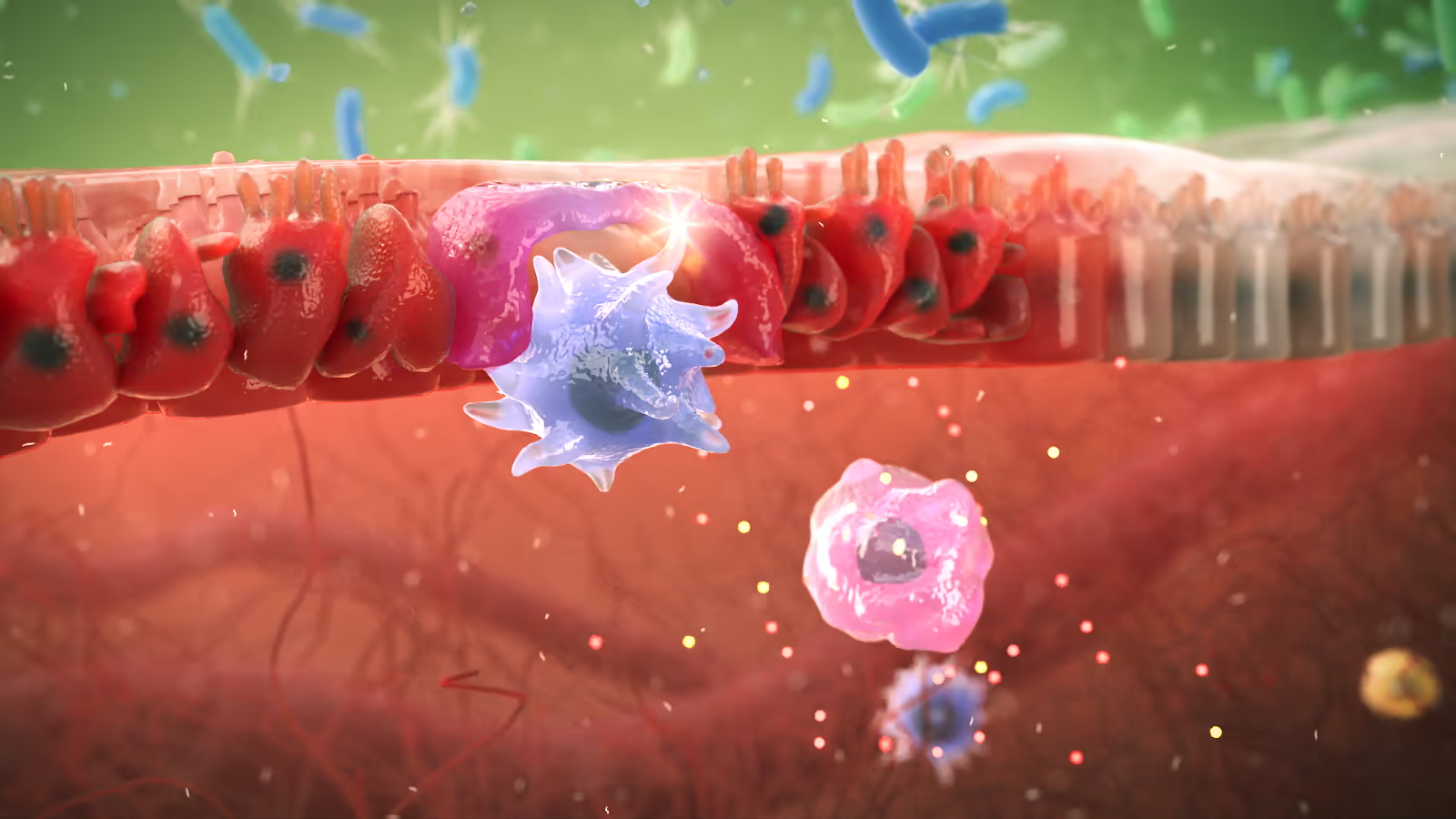
Add real value to your project.
Our clients see real results with our animations across a broad range of use-cases.
Mechanism of Disease
Bring the complex cellular and molecular drivers of disease to life through immersive, step-by-step storytelling.
Mechanism of Action
Differentiate, educate and excite with a visual representation of your drug’s unique properties.
Explainer Animations
Break down intricate concepts into clear, dynamic animations designed to resonate with a broader, non-expert audience.
Investor Presentations
Secure funding with high-impact, cinematic visuals that communicate scientific potential louder than words.
Data Visualisation
Turn complex datasets into a compelling, easy-to-follow animated journey that eliminates data overwhelm.
Clinical Trial Recruitment
Use engaging, empathetic motion graphics to demystify trials and encourage enrolment.
Patient Education
Accessible, sound-enhanced animations that help patients truly understand their condition and treatment journey.
Internal Training
Move beyond slides with engaging content that explains the science behind your latest asset or clarify what HEOR really is.
Commercial Launch
Deploy strategic, high-energy animated assets that drive prescribing habits and capture attention.