Discover how Fusion Animation demonstrated a new PD-L1 checkpoint inhibitor in cinematic detail.
Explaining a checkpoint inhibitor in mCSCC.
UNLOXCYT proved itself as a novel checkpoint inhibitor. Calcium+Company collaborated with us to effectively differentiate this new PD-L1 inhibitor, aimed at mCSCC.
Client:
Calcium+CompanyObjective
- Explain a three-part MOA spanning both arms of the immune system.
- Differentiate cosibelimab clearly from PD-L1 inhibitors in a crowded field.
- Communicate scientific nuance including a tolerability advantage.
Results
- 3D MOA video live across HCP congress booth and website.
- Created stills for an interactive web experience.
- Interactive MOA display featured on unloxcytpro.com.
Outcome
The first approved checkpoint inhibitor for mCSCC in the US
We built a medical animation for HCP education and building awareness in a crowded field.
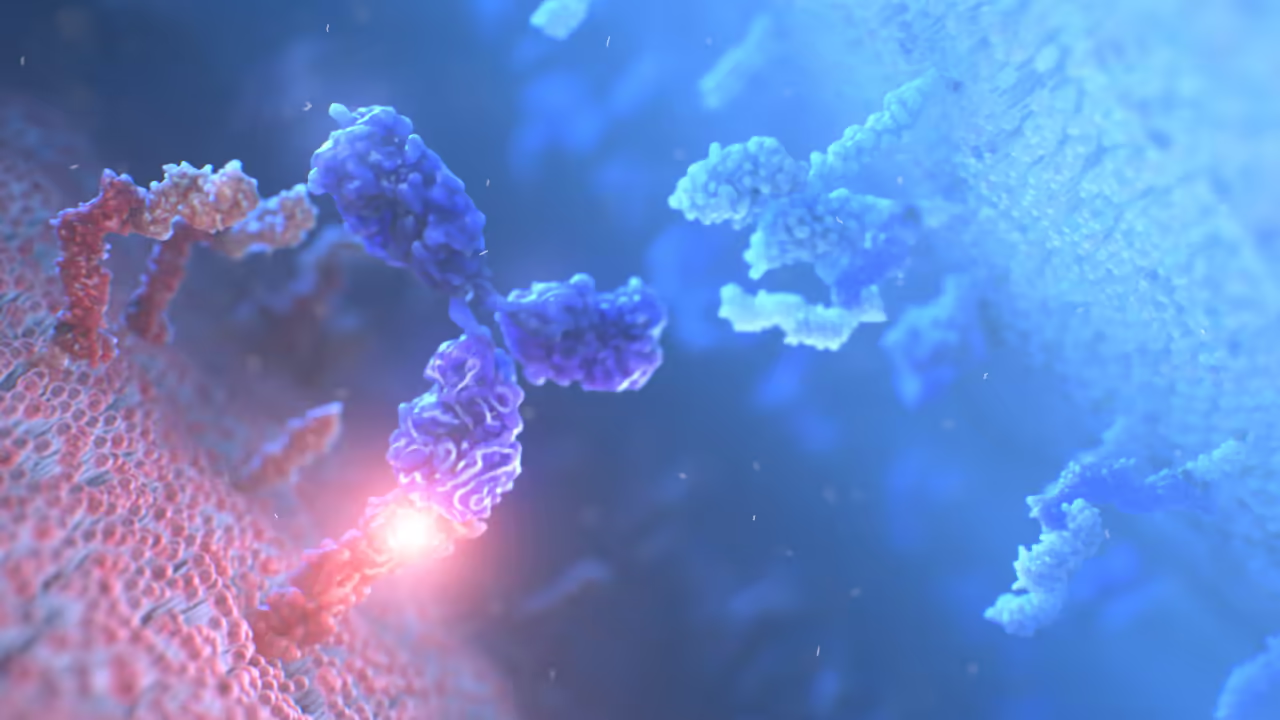
In partnership with an excellent agency, Fusion delivered a medical animation that mapped all three layers of UNLOXCYT’s mechanism - adaptive T cell restoration, innate NK cell activation via ADCC, and preserved PD-L2 signalling - into a single, clear visual narrative for HCPs.
We worked collaboratively with the script they had developed and created a visual language to tell the three strands of the story. We also created stills which the agency used to build an interactive depiction of the MoA on the UNLOXCYT website.
The UNLOXCYT MoA is a complicated one with many strands.
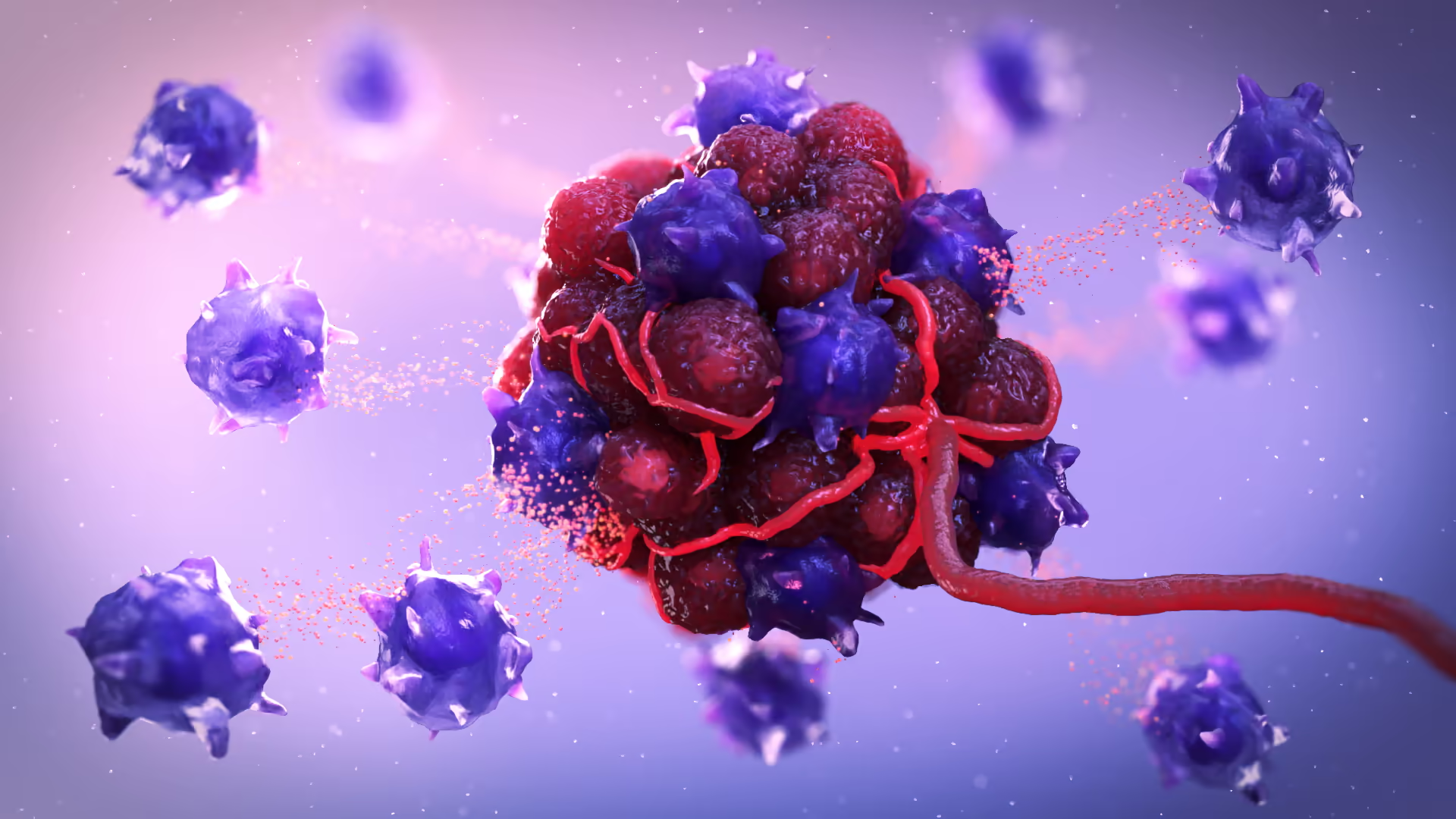
By binding to PD-L1 it prevents the tumour cell interaction with T cells and enables T cells to recognize the cancer cells.
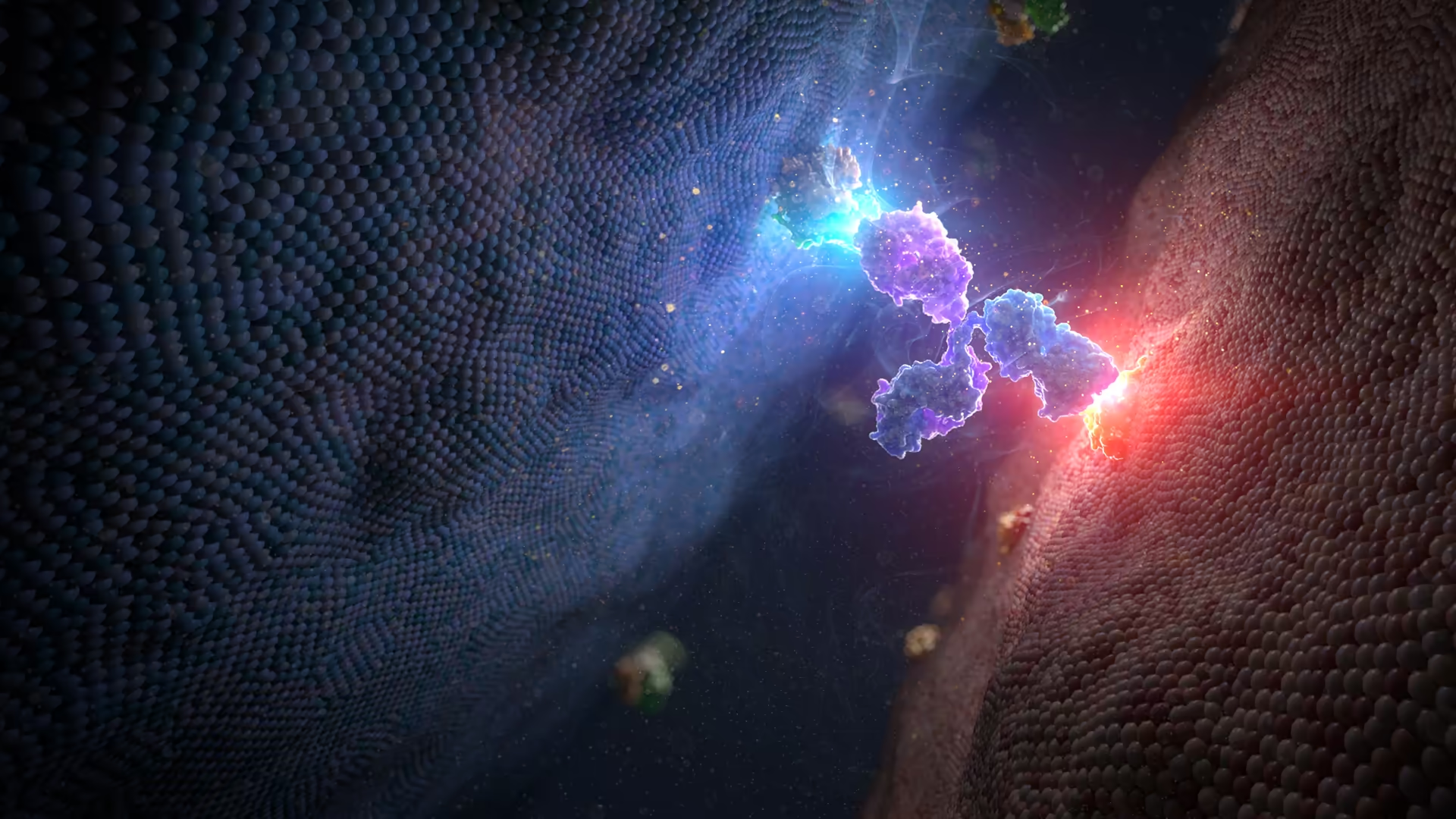
UNLOXCYT also prevents the interaction between PD-L1 And B7.1 on APCs. This results in the reversal of inhibitory signals that dampen antitumour responses.
UNLOXCYT also is able to bind to NK cells thanks to an active FC domain. This induces antibody-dependent cellular cytotoxicity.
We used several techniques to help add visual simplicity to an interwoven narrative with many characters.
- When we first introduce a T cell the camera follows the cell very closely for a ringside view of tumour cell apoptosis. [[00:25]]
- The glassy, semi-transparent cell representation was chosen to be eye-catching, and easy to identify and differentiate between different cell types. [[01:32]]
- The use of colour was very important. One consistent colour was used to represent a cell, plasma membrane and receptor type. For example the T cell, T-cell membrane and PD-1 receptor are all the same shade of blue. [[01:02]]
- Transitions between different levels of zoom were all careful considered so that the viewer wasn’t disorientated as the camera travels from molecular level up to cell level and ultimately out to the patient. Here the angle and orientation of the plasma membrane and the cell position had to be carefully aligned. [[02:50]]
- The use of the ribbon within the FC domain of UNLOXCYT enabled us to add a highlight to emphasise the unique nature of the active Fc domain. [[03:04]]
The result is an animation that earns credibility with HCPs not by simplifying the science, but by respecting it and giving clinicians a precise visual language.
mCSCC = metastatic cutaneous squamous cell carcinoma; B7.1 = B7, type 1 membrane protein (also called CD80); MOA = mechanism of action; NK = natural killer; PD-1 = programmed cell-death protein 1; PD-L1 = programmed death-ligand 1.
More Case Studies
The proof is in the pudding. Check out our previous solutions for more insight into how we can help.
Add real value to your project.
Our clients see real results with our animations across a broad range of use-cases.
Mechanism of Disease
Bring the complex cellular and molecular drivers of disease to life through immersive, step-by-step storytelling.
Mechanism of Action
Differentiate, educate and excite with a visual representation of your drug’s unique properties.
Explainer Animations
Break down intricate concepts into clear, dynamic animations designed to resonate with a broader, non-expert audience.
Investor Presentations
Secure funding with high-impact, cinematic visuals that communicate scientific potential louder than words.
Data Visualisation
Turn complex datasets into a compelling, easy-to-follow animated journey that eliminates data overwhelm.
Clinical Trial Recruitment
Use engaging, empathetic motion graphics to demystify trials and encourage enrolment.
Patient Education
Accessible, sound-enhanced animations that help patients truly understand their condition and treatment journey.
Internal Training
Move beyond slides with engaging content that explains the science behind your latest asset or clarify what HEOR really is.
Commercial Launch
Deploy strategic, high-energy animated assets that drive prescribing habits and capture attention.